HAPPY FULL MOON IN AQUARIUS/LUNAR ECLIPSE!

ecli

HAPPY FULL MOON IN AQUARIUS/LUNAR ECLIPSE!

Today we are blessed with both a full moon in Aquarius in the sun sign of Leo as well as a partial lunar eclipse. Eclipses are a time of magic and mystery as the planetary alignment reflects the illumination of both our bright sides and our shadow sides all at once. Eclipses are a time when we gain the opportunity to consciously see all sides of ourselves. This is a time when we can feel and take note of the energies of both light and dark quite clearly. As such, we can ask ourselves: how can we evolve to our highest potential?

The balance between our Leo sun’s flamboyant, outgoing nature and the stoic Aquarian moon can have us taking one step forward and two steps back all day long. This tandem influence may have us doubting our actions right after we take them. Let us remember that we are strong warriors who can trust ourselves to act confidently in any situation that presents itself. Though this partial eclipse is invisible from North America, we will feel its energetic effects from 10:50 am central time until 3:50 pm. This five hour period will find us in deep reflection.

These 48 hours are an excellent time to allow the sun to illuminate our shadow sides; brought out by the strong lunar eclipse influence. This illumination allows us the circumstance to shake ourselves free of our unhealthy belief systems and karmic patterning. Because the moon is waxing full in Aquarius (the water-bearer), we can be sure that any emotions that we have been holding on to for the last six months or longer are sure to come to the surface in order to be released. It is our choice whether we wish to utilize this exit point to our advantage or choose to retain these emotions that no longer serve our highest good. Though releasing stale emotions can be an uphill battle, it is important as spiritual warriors to commit to our paths. It is important o walk them in faith that any challenge we face and succeed is sure to be a source of empowerment, strength and conviction.

The nature of this moon may have us reflecting on our childhood; how it shaped us and how we live and love currently. How have we learned to treat others? How have we let ourselves be treated by others? And perhaps most importantly; how have we learned to treat ourselves? The answers to these questions have the potential to cause slight discomfort. However, let it be known that the more conscious we become of our thoughts and feelings, the greater the likelihood we have to heal them. In turn, the more emotional freedom we will incur.

Because of the confident Leo sun, this full moon can have us boldly preparing to release any old structures that prevented us from living out our dreams. The Aquarius moon will bring to the surface the old patterns and beliefs for the Leo sun to free. Our Leo sun is still engaged with Mars, bringing about a strong desire for self-expression and authenticity. This creates a perfect atmosphere to turn within, take a moment to realign with your deepest desires and make them happen! Remember that when you reawaken your authenticity, you attract experiences and people who are in best suited to help you live and love to your highest potential!

THE “PLIGHT” OF THE SPIRITUAL WOMAN

plight1


THE “PLIGHT” OF THE SPIRITUAL WOMAN

We are strong. We are fierce. We are powerful. We are often single. Why?

A great many women are single in this day and age. Because of modern society’s striving for gender equality, women no longer need men in their lives; it has now become a choice. This we know. Though this is certainly something that we, womankind have been praying and fighting for for centuries, there is also a sort of side effect of this shift.

As the global social consciousness shifts into gender equality, so does spiritual consciousness. Because of this, women are coming into their power. We are becoming empowered at an exponential rate, reclaiming not only our individual empowerment, but also the empowerment of woman kind, past, present and future. And this is an incredibly important task! Some of us know that we have chosen to incarnate at this time to fulfill many spiritual purposes. And it empowers us further. But at the end of the day, if we are making such great strides to heal ourselves, womankind and the planet, why are we often unable to find an appropriate long-term mate?

Finding a mate on our wave can be challenging as our wave is can be inconsistent, which can make relationships challenging. There is much to learn in solitude. And relationships create karma which can be antithetical to our progress on the path to enlightenment. When we examine the root of why it is that we are seeking a partner, perhaps we can see that often (not always, but often) it is due to a reflection of something within us that bears attention. Is it that we feel lonely? Do we feel insignificant? Do we seek a constant source of validation from others? Before we find the right partner for us, we will want to be whole, to be complete, to be content as individuals so that any mate we attract will be of a sympathetic vibration. In order to be whole, we must learn to love ourselves for who we are; from every which way.

There is, of course, the old adage that women mature faster than men, or that there is no such thing as a “good man”, etc. That, friends, is a belief system. There are many spiritual, wonderful men with good hearts and kind souls. However, we might find that the spiritual man is, alike us, going through his life in a solitary fashion. Why?

Whether the spiritual woman has committed her life to her spiritual path before she incarnated or sometime afterward, one similarity is clear: spiritual people grow, shift and learn at an exponentially accelerated pace. This rapidity of shift and flux can make it challenging to find a partner. To find two souls who accelerate at the same pace and grow in the same direction is extremely rare. It is additionally true that should we find partners who have also committed to their spiritual journeys, we may both grow at a similar pace, but our respective growth can easily develop in different directions.

In addition to accelerated growth, a majority of spiritual women are fiercely independent. In some cases so much so that it can be intimidating to any perspective partners. Or, it can be a source of contention in cases of two empowered partners in a relationship. Because spiritual women (and men) are on a mission, it can often feel like their partner is impeding their progress. If not initially, then 10, 20 or 30 years down the road. Of course, this is not always the case. In some cases, our partners can help to uplift us and provide a sacred space for us to grow. This connectivity of growth will only happen when both partners have done the work on themselves to allow a truly loving relationship to enter into their lives that is genuinely created for the good of all involved.

The spiritual woman embodies the essence of determination. She embodies strength of conviction that is unwavering. It is this strength that gets her through the challenges that her spiritual path entails. And she treads this path with whole heart and soul. As she accelerates along this path, she leaves others in her dust. And the further along her path she finds herself, she also finds herself surrounded by fewer and fewer likeminded individuals, as fewer and fewer people have the vigor to work so hard on themselves. Though it is a blessing to be so very strong, it can also remind the spiritual woman that she may find it difficult to find a partner as far along as she has come. Any partner who has not done the work to heal him/herself could cause an unbalanced relationship.

Committing herself to spiritual warriorship allows the spiritual woman to unmask herself and live in authenticity. Thus is can be arduous to find a partner as authentic as she. She soon sees the truth behind all illusion; the same illusion that most live, lifelong as their reality. Finding commonality is difficult.

The spiritual woman boldly faces her challenges. Though it can often seem easier to have a partner to lean on, sometimes this is not her path. This can be due to a soul contract she has with herself. To live a life of solitude for a length of time or a lifetime in order to learn the lessons so that she will grow and heal in a specific way.  And this makes her a warrior. Instead of focusing on what she may not have in her life, it is important that she focus on building her inner strength and fortitude. This fortitude has purpose. Not only for the spiritual woman but for those she comes into contact with. She is a role model. She is the one who shares wisdom and truth with anyone who will listen. She is the one who lives out the quiet solitude necessary to fully understand her soul and its purpose. And once she becomes the wisdom she studies, she is able to change the world.

WHY DOES MY CAT VOMIT?

cats

WHY DOES MY CAT VOMIT?

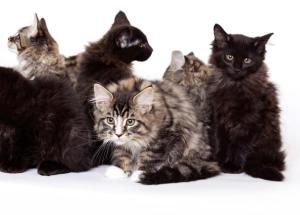
Anyone who has had the blessing of living with a cat companion knows how sensitive their little tummies can be. Boy, are they cute, what makes them vomit all of the time? It seems that they are incredibly specific when choosing what they will ingest. And, if they ingest anything other than what their bodies need, it comes back up.

There are several reasons why kitties regurgitate so frequently. The gastrointestinal systems of felines are extremely sensitive. Since companion cats are no longer solely consuming what they would in nature, much of the stomach upset can be resulting from processed foods. If you are feeding your kitty poor quality food, which happens more often than you might think, his body will reject it. ALWAYS pay attention to nutritional ingredients. Just because a label says “protein” does NOT mean the protein is a nutrient rich source. In fact, a few common cat food companies have been discovered to use ground up bird feathers, beaks, hooves and heads (Dr. Karen Becker, D.V.M.). Though companies claim that the aforementioned are “nutrient rich protein sources”, they are actually composed of insoluble proteins such as keratin. Keratin is the protein found in hair and nails. It will not be absorbed into the body at all; it will go straight through the body to be released through elimination.  Be sure that you know your animal’s food source for certain to ensure a proper nutritional diet and quality of life.

Another reason for the constant kitty up-chuck is that they can develop allergies to foods that they have been eating for prolonged periods of time. If, seemingly out of nowhere, your cat begins to throw up frequently, she may have developed a sudden allergy to the food she has been eating for years. Thankfully, this is an easy fix. Many holistic vets suggest that alternating cat food protein sources is the healthiest form of diet for your cat. It is important to note that whenever you choose to switch your cat’s food, you should do so very slowly, mixing the foods together, eventually phasing the first kind out. Some vets believe that cats should stay on one kind of food for their whole lives. I strongly disagree with this idea as I have witnessed it having a negative effect on most cats. However, if your cat has a preexisting condition and requires special food, check with your holistic vet before making the switch. I will add here that if you are feeding your cats “veterinarian recommended food” that I STRONGLY encourage you to read your food labels. It is shameful what some cat food companies call “food” in the name of making a buck.

If your cat gobbles up every meal more quickly than you can feed him, this can contribute to the vomiting cycle. Often, in multi-cat homes, some cats feel that they need to eat all of their food before anyone else gets it. As well, in situations with newly adopted cats, they may be experiencing malnutrition and want to consume the food as soon as they see it. Be sure to work with each cat in your home individually to indentify why they are vacuuming up their food so quickly! Some practices include; feeding each cat in a separate room, not leaving food out all day long, sitting with your feline friend to ensure she eats in a slow paced manner and more. Becoming aware of your kitty’s eating time habits is a great way to keep her healthy!

Is your kitty too hungry? Cats can also vomit frequently if their feeding times are too far apart. Like dogs, the digestive juices of cats are quite acidic and can cause tummy upset if they are moving about in the stomach when the cat is hungry. Though it is not a good idea to leave food out all day long for snacking, it may be worthwhile to experiment with feeding times and either add a meal or find a feeding time compromise so your kitty isn’t in pain while she is waiting to be fed. Ideally for an indoor cat, feedings should occur 4 times per day. This would equate to one quarter can of food every three or four hours.

If your cat is lacking digestive enzymes, this may lead to poor digestive vomiting. This is easily remedied by adding natural sources of enzymes such as papaya seeds or canned pumpkin to the diet. Alternatively, feline-specific digestive enzymes can be purchased from your local holistic veterinarian.  If your cat is suffering from a lack of enzymes, the vomit will appear with undigested food and is likely to occur right after eating. This cat will also likely eat too quickly as he is unable to retain his food and will be very hungry.

Lastly, cats with hairballs will also vomit. Cat hair is not easily digested and can cause a great deal of upset in your cat’s system. To remedy this, brush your cat frequently and clean your home on a very regular basis. This includes weekly dusting and vacuuming. Cats often have a condition called “pica” and will eat non food items such as dust and hair on the ground if not swept up which is why its extra important to keep your home clean!

Of course it is also possible that your cat needs GI testing. It is always a good idea if vomiting persists and includes any additional physical or behavioural symptoms from your kitty, to see your holistic animal health care practitioner.


10 FUN FACTS ABOUT CATS ANG DOGS

catdog21

10 FUN FACTS ABOUT CATS AND DOGS:

1)      Dogs have fur whereas cats have hair. Fur is coarser and much thicker in diameter than hair.

2)      It’s more important to clip a dog’s nails than a cat’s because cats have retractable claws. Since dogs do not have retractable claws, there is more risk of infection due to claw damage from overgrowth.

3)      Dogs have a component in their saliva that heals wounds. Their saliva contains proteins such as histatin, lysozsyme and thiocyanate which help to prevent infections. Dog saliva also contains a protein called Nerve Growth Factor which grows and maintains cells. The latter allows for skin re-growth around a wound to have a dramatic increase in healing time.

4)      Dogs can subsist on a vegetarian diet whereas cats cannot. Genetically, cats originated in the deserts of Africa where they maintained a diet of raw meat and blood. Even drinking water has become a learned practice by domesticated cats as in their origin of the desert, water was scarce.

5)      Cats do not meow to each other; they only meow to get their person’s attention or the attention of other humans. They may hiss and growl at each other but this is a warning mechanism as opposed to regular communication.

6)      Whereas dogs, horses and humans can digest grains, cats cannot. As opposed to the initial three on this list, cats lack a digestive enzyme called amylase that is responsible for the breakdown of grains in the body. Most dry cat food contains a high amount of grains in its ingredients. When cats eat grains on a regular basis, they cannot metabolize them appropriately and they get metabolized as sugar. This poor metabolic absorption will create insulin spikes due to the sugars that are unprocessed in the cat’s body. After prolonged exposure to these grain sugars and insulin spikes, feline diabetes is almost always to follow.

7)      Cats purr for an array of reasons; not just because they are happy of hungry. Their purr registers in the Hertz scale in a range that has been studied to facilitate bone and muscle tissue growth in both the cats themselves as well as humans.

8)      Petting a cat or dog has been shown to increase the levels of oxytocin (the love hormone) in the human brain. In turn, this activity has a notable healing effect on depression, PTSD and other mood disorders.

9)      Almost all Calico cats are female; almost all completely orange cats are male. Their markings are gender-specific; they exist on the y and x chromosomes respectively.

10)   When dogs walk, their front left leg moves forward with their back right and their right front leg moves forward with their left. In essence, their arms walk forward in tandem with their opposite leg. When cats walk forward, they walk same arm, same leg. Right front moves forward with right back, left front moves forward with left hind.

How many of these did you know about? Can you think of any others?

9 SIGNS THAT YOU’RE AN OLD SOUL

HEALING CRIS

9 SIGNS THAT YOU’RE AN OLD SOUL
As many of us believe, we have lived lives before this one. Some have lived a few and some have lived a great many previous lives. According to spiritualist philosophy, we continue to reincarnate until we have become fully in alignment with our Divine essences. Each time we reincarnate, we learn certain lessons. We carry with us, from life to life, that which we have already learned in order so that we need not repeat the same trials unless we are still to learn from them.
Your past lives may not have occurred on Earth, or as a human. You may have been terrestrial, animal or any other Universal being. You may even have already completed your spiritual journey and have chosen to be reincarnated to lead others to enlightenment! Feeling like you don’t belong here on Earth is a very common feeling among terrestrial souls and souls who chose to reincarnate for the greater good of humanity. The unwavering desire to be of service to animals, humans and nature is another common sign of having lived the majority if not all of your necessary lives on Earth.
Many old souls have experienced past lives full or trauma and turbulence. Occasionally there will have been unresolved issues. This will be evident in any current circumstances that seem familiar, or include a feeling of “heart-wrenching”, “longing” or any such intense feelings. We may be drawn to certain places and certain people in this lifetime to work out those unresolved issues.
Other old souls may remember lives of joy, celebration and wealth where they lived and loved. They, too may be drawn to certain people and places as a result of SOUL RECOGNITION- meeting someone for the first time and feeling like you’ve know them before but can’t quite place it.
It’s always interesting to wonder how old our souls are and where and when we may have lived before. Here are 9 ways to tell if your soul has been around throughout the ages:
1) You are drawn to items from a time period before the one you’re in. These items can be antiques, movies with plots about a specific time period, art, music etc.
2) You have an innate understanding of the nonphysical realm.
3) You are naturally empathic and/or telepathic
4) You have a strong desire to travel to a foreign country and once you get there it feels like home, regardless of whether you have previously been there,
5) You are drawn to learn a foreign language that has nothing to do with your day to day life.
6) You can channel spiritual, nonphysical beings
7) You have little to no focus on material objects, and place your focus on living free of attachment
8) You have an innate understanding that all beings are equal and have tremendous compassion for each and every being on the planet (and in the Universe)
9) You have dreams that you are in a different time in a different place.
If you’re not sure where or when you have lived before and would like to know, there are a few ways to begin to delve into that realm. You can begin a meditation practice, a dream journal or even undergo hypnotherapy. You can begin a Shamanic Journeying self-practice, become a Reiki Master or other energy work practitioner or simply ask Spirit to help you remember, as long as it’s in your highest and greatest good!


5 HOUSEHOLD ITEMS SURPRISINGLY TOXIC TO DOGS

toxicdog

5 HOUSEHOLD ITEMS THAT ARE SURPRISINGLY TOXIC TO DOGS:

1)      XYLITOL- There is always hype surrounding sugar-free products being healthier choices for us on our daily paths to wellness. While this can be true for humans, many sugar-free foods contain a chemical sweetener that is TOXIC to dogs. This chemical is found in sugar-free peanut butter, sugar-free chocolate, gum, candy and many other regular household items. The sugar-replacement is called XYLITOL and is highly toxic to dogs. It can cause blood sugar lows and induce seizures. Make sure that you read all of your sugar free food labels carefully and keep the toxic ingredients out of reach of your dogs!

2)      ACETAMINOPHEN- any pain-killers, blood thinners, or other medicines that contain ACETAMINOPHEN should always be stored out of the dog’s reach. Though most human medicines may cause damage to dogs, Acetaminophen is particularly toxic.

3)      ANTIFREEZE- Obvious to most dog owners, antifreeze is a poison. Lesser obvious to most dog owners is that the taste of antifreeze is appealing to dogs. This makes them unaware that it can harm them. Pay attention to where you leave your cans of antifreeze in your garage or basement to ensure your dog stays away.

4)      TEA TREE OIL (also known as Melaleuca oil) – tea tree oil is a highly useful oil to have on hand. It is great for cleaning household items while being environmentally conscious. Please be aware that this oil is highly toxic to dogs (and cats). They do not have to ingest it for it to cause harm. If it is rubbed on their skin or paws, it is likely to rapidly absorb into their bloodstream and cause illness. Keep it away from your animals and where your animals put their paws!

5)      GRAPES AND RAISINS- grapes and raisins have been linked to kidney failure in dogs. Experts say that even a small amount can cause harm to some dogs. They are sweet tasting, so if left out your dog might want to try to eat them. Make sure they are out of reach!

These are only five of many common household items that unknowingly may cause an accident with your dog. There are many, many more to take note of! Before adopting an animal into your home, its important to do as much research as we can to ensure a safe and happy environment for all!

BEWARE AND TAKE CARE!

ANIMAL PSYCHOLOGY 101: OVERCOMING FEAR


animal_communicator_dog_anxiety


ANIMAL PSYCHOLOGY 101: OVERCOMING FEAR

It is extremely common for our animal friends to develop fears and anxieties due to their highly sensitive nature. For many people, it can be trying to live with animals who become anxious and fearful. In addition to it creating anxiety within us, it can at times be heartbreaking to watch.

I have been asked more often than not, how to communicate with an animal to get them to stop their fearful behaviour. Whereas I would love to have an “off switch” that I can use in these situations, there is no such thing. In fact, in these situations, the most tested and true methods of fearful behaviour treatment lies within patience and consistency.

As we may all be aware, the animal brain operates differently than the human. Of course there are many similarities, however one difference is the strength of their fight or flight reflex. Their fight or flight reflex is stronger due to generations of adaptation to environment and survival mechanism.

Many of our animal friends develop fears from living with humans. When studying cat and dog behaviour, we can safely say that common fear origins are noise, objects at speed (i.e. when walking toward a cat or small dog, she may run away because all she sees is your legs as posts- not part of you, her caregiver) and most assuredly abandonment and abuse.

Though fear originates from these sources, what affects our animals afterward is a trigger. Triggers are experiences that remind our animals of past trauma. In the case of an abused dog, when the dog sees a broom, he may cower because in his last home he was hit with a broom as punishment.

The number of animal fear behaviours is limitless. The good news is that there is one method that is easily accessible to all, if they commit to it. This method requires time, patience and understanding.

When we are working through fear with animals, we must ALWAYS go at the animal’s pace. If we speed through the exercises, we could frighten them even more and always be starting from square one. In order to go at the animal’s pace, it’s important to understand your animal and how she operates. The main point of any behaviour training when it comes to cats and dogs is to go one small step at a time. As humans, we tend to be in a hurry. Remember that animals live in the moment, only according to the clock of their bodies. This means that different animals will learn at different speeds, on their own time. Keeping this in mind, we may now go ahead with re-training our animal’s behaviour.

Any time we are working with our animal friends to conquer fearful behaviour, we must always understand the importance of going one step at a time as mentioned earlier. As an example, I have recently worked with a client and her dog who is afraid of being brushed. The dog is a large breed and sheds a lot. My client has tried repeatedly to brush her dog’s feet and he simply will not have it. The question here was- is the dog afraid of being brushed or is the dog afraid of the brush itself? To answer this question, we must bring the brush to the dog and see if he flinches. If he does not flinch at the sight of the brush, we know it is not the brush itself. The next step was to get the dog to relax while being brushed. I advised my client to go step by step with her dog. In this example, she would bring the brush out, set it down and walk away. The next day she would bring the brush to his lower shoulder and walk away. And every day after that she would go one inch more toward his feet from his torso. By breaking this activity onto small steps, the dog will not likely be as anxious.

This behaviour modification technique can be used across the board with the understanding that some dogs and cats may take longer than others to supersede their fears. Whereas some dogs may be ok going inch by inch, day by day, others may relate better to inch by inch, week by week. This is where our patience is of foremost importance.

In addition to your own patience it is always of great import to ensure that the rest of the household members are on the same page. As with any behaviour training plans, consistency is key.

Creating a well-thought out plan and staying consistent and patient with it is the best way to tackle any fear-based behaviour in companion animals. By taking the time to do so, you are taking the first steps to ensuring a peaceful and harmonious home for the whole family.


TOP 5 COOLING FOODS FOR YOUR ANIMAL DURING A HEATWAVE:

sweaty_dog


TOP 5 COOLING FOODS FOR YOUR ANIMAL DURING A HEATWAVE:

According to Traditional Chinese Medicine, food has energy. Not only does food have energy, but it also has three different types of energetic classification. Different types of foods have warming, cooling or neutralizing effects on the body. Especially if your animal is sensitive to the extreme temperatures of summer, you may want to consider adding one or two of the following foods to his/her diet during a heat wave:

5) Millet- millet is a grain. Though there is much hype about living a grain-free life, a small amount of THOROUGHLY COOKED millet in your cat or dog’s diet can do a lot to cool down his system! Make sure the millet is boiled to almost a paste before feeding. This will ensure proper digestion. Please be aware that in some animals, excessive millet causes constipation. Use a very small amount, increasing as necessary.

4) Broccoli- Any green, leafy food, according to Traditional Chinese Medicine, is a “cooling food”. You always want to be sure to thoroughly steam the veggies before feeding. Cats and dogs have very sensitive digestive systems. If not cooked, the veggies can cause uncomfortable gas and bloating, and often the raw veggies will pass through the GI tract without being digested.

3) Kidney Beans- By feeding your animal fully cooked kidney beans, you are not only accelerating his digestion but you are also providing his GI system with a food that will help keep his core temperature down during the heat of summer. DO NOT feed your dog or cat canned beans. ALWAYS opt for bulk (organic if possible) raw beans and then boil them yourself. It may also be helpful to mash up the cooked beans before feeding as this will assist in your animal friend’s digestion.

2) Celery- Celery is nice and cooling. Some animals will not eat celery as is. If you are feeding one of these sensitive animals, be sure to steam the celery, grind or chop very finely and then add to your animal’s wet food so as to disguise it.

1) Honey- According to Traditional Chinese Medicine, honey causes a moistening effect in the lower intestine when ingested. As a result of this moistening effect, the GI system becomes cooler and more comfortable for your animal friend. Other benefits of honey include: mood regulation, acceleration of wound healing, anti-inflammatory properties, tissue growth stimulation (aids with cell damage/repair).

Please note: When introducing any new foods to your animal’s diet, always do so slowly and methodically. Start with a very small amount and add more as needed. All of these food supplements should be added once per day to wet food, using about 1/8 tsp to start.

If your animal’s tummy is far too sensitive to eat these foods as whole foods, you may find it to be beneficial to add bits of the foods to water or bone broth and freeze it. By making food ice cubes, your dog and cat will love to cool down from both the frozen cube and the yummy treats inside!


HAPPY FULL MOON IN CAPRICORN!

caprfull

HAPPY FULL MOON IN CAPRICORN!

This is a very powerful moon! This weekend’s energy is all about transformation. There is a strong pull toward breaking free of the old to make room for the new and higher. Because Capricorn correlates to finances, family and relationships, this is a very intense time. This moon is an excellent time to meditate and heal in order to transcend your own challenging emotions and belief systems.

This weekend’s lunar influence persuades us to choose between feeling victimized by our own feelings of insecurity or superseding them to take charge of our personal freedom.

The contradictory energies of the full moon in Capricorn and the Cancer sun can leave us struggling to find our ground. Though both Cancer and Capricorn are family-oriented signs, they differ greatly in the realms of logic vs. emotion. Capricorn, a grounded earth sign will draw our attention to finances and power struggles. Cancer, the Divine Feminine watery sign of nurturing will draw out our emotions. If we choose to succumb to both of these forces, we may find ourselves confused and unable to focus.

Capricorn is the “getting things done” sign which will encourage us to take charge of our projects. This particular full moon has a heavy Plutonian influence as well. Pluto is the celestial body which correlates to karma. The combination between the Capricorn full moon and the Plutonian energy will create a strong desire to push through old patterns. Pluto’s involvement with this full moon will allow us to get to the bottom of our feelings of lack of self worth and inferiority; whether they come from this life or lives past. It will allow us to begin to see ourselves in a whole new light- if we are willing to do the work.

On the bright side, because of Pluto’s influence on this intense moon, any new connections we make are sure to be deep and long lasting!

This moon has the authority to be highly transformational. It is our choice whether or not to rise to the challenge. The energies of the moon’s sign act as frequencies and influence the areas of your mind that relate to them. Be bold, be brave. Accept the challenge of working through those energies that no longer serve your highest good. Because what lies on the other side of the hard work is a gift, most beautiful!

YOU MAY BE ENCOURAGING YOUR ANIMAL’S BAD BEHAVIOUR! HERE’S HOW:

baddog


YOU MAY BE ENCOURAGING YOUR ANIMAL’S BAD BEHAVIOUR! HERE’S HOW:

Inviting a companion animal to be a part of your family is a joy and wonder for most. However, after a short while, it can be easy to get to comfortable and forget that animals need a consistent environment even when the novelty of their company wears off! It can be very easy to slip into habits that may not be beneficial to you, your family and your animals. Here are 8 of many ways that you may be unintentionally encouraging your animals’ bad behaviour:

1)      Tug of war-By playing tug of war with your dog, you are encouraging a dominance struggle. What’s more, if you let him win, he will believe that he is the boss of you!

2)      Coddling-Many animals are fearful of loud noises. It is natural for us, as compassionate beings, to run over to them, take them in our arms and sing them to sleep on a stormy night. In reality what we are doing is showing our animal friends that they will receive positive reinforcement for getting scared. This will encourage them to remain scared of loud noises instead of realizing that the loud noises can’t hurt them and there’s really nothing to fear at all!

3)      Chasing your animal during playtime, or having your animal chase you- More often seen in herding dogs, when playtime involves a lot of chasing and fun related to chasing, you are indirectly encouraging your dog to act on his prey and/or herding drive. This could cause a regression in any behaviour training you have done to have your dog stop pulling on the leash when she sees a squirrel.

4)      Ignoring your animal’s warning signs, especially around children- While children are still learning about boundaries with companion animals, it is imperative to take note of your animal’s warning signs. Despite their best efforts to warn you that your children’s behaviour s becoming too much for them, they can often get spooked and lash out at your children. Obviously this is a terrible situation for everyone in the home as well as visitors! By paying CLOSE attention to how your animals respond to the way children are treating them, you can easily prevent unwanted behaviour. Housing both animals and children can be a tenuous balance that often results in an animal needing to be re-homed. This is a traumatic experience for you, your children and your animals. It is completely preventable if you understand how your animal communicates that he has had enough play time with your children. Remember that animals are “people” too and are not toys, dolls, climbing structures or stuffed animals. They will respond negatively to being poked, prodded, climbed on, shoved, jumped on, etc… wouldn’t you? It is our responsibility as household leaders to encourage respect of boundaries between our children and our animal friends.

5)      Feeding animal from table- By sneaking your animal table scraps, you are encouraging your animal to beg. You are encouraging him to eat human food which can be highly detrimental to his health. You are also opening the door for you animal to want to jump on the dinner table and kitchen counters, as he will believe that he has been given permission to eat alongside you in the same places you do.

6)      Yelling at your animals when they are doing something unacceptable- Your animal will see this as getting your attention, especially if you only show attention when she is doing something “negative”. Therefore, the behaviour will have positive consequences in your animal’s mind. On the opposite end of the spectrum, your animal may quickly become frightened of you if you yell! To stop undesired behaviour correctly, we must show her, not tell her. If your cat jumps on the counter and you wish for her to stop, place a cookie tray with coins on it. The noise of the coins on the metal will allow her to become afraid of the countertop, NOT you!

7)      Not giving your dog enough exercise- When dogs are not adequately exercised they will almost definitely act out. This is because dogs have a lot of natural energy. It is ALWAYS imperative that if you plan to bring a dog- especially a larger breed- into your family, that you plan your schedule around the dog’s need to exercise. If this is not something that your family can adapt to, do not get a dog. Being the human companion of a dog who is not exercised properly becomes a serious problem for the dog and subsequently the whole family.

8)      You don’t enforce the rules around other people/Inconsistency in training and rules between members of the household- Your animal will not understand why it’s ok to jump on you when you get home and it’s not ok to jump on visitors. Your animal will not understand why it’s ok to bark at passers-by when you have no visitors over and it’s not ok to bark when you do. Bottom line? Consistency, consistency, consistency of training!

9)      Holding the leash improperly- Your dog is sensitive to how you and the other members of your family hold her leash. You always want to come to a point with your dog where you are holding the leash in a relaxed way. You want to avoid clenching the leash to your body, or not giving your dog enough slack on the leash. If you are holding the leash in the above two ways, your dog is interpreting this as you not feeling safe. Your dog will bark at other dogs and people on your walks as she will believe she needs to step up to alpha position. Your dog will feel that she needs to protect you, and will do so by lashing out at oncoming dogs and people. In order to avoid all of this undesirable behaviour, you will want to implement an obedience plan with the other human members of your family so that you can all walk confidently together. The plan will be consistent and will train you and your dog to walk in a healthy and enjoyable way!

Any way you look at it, companion animals are a blessing to call part of the family. They provide comfort, joy, loyalty and relentless love. However because human nature is secondary to them, they do need a little extra training, understanding and patience!

Before we get upset with our animals about their behaviour, it’s important to examine whether we are the underlying cause. What can we do to set our animals up to succeed?  Setting our animals up to succeed is a key component to a happy home for all involved!